
 Send Inquiry


 Send Inquiry
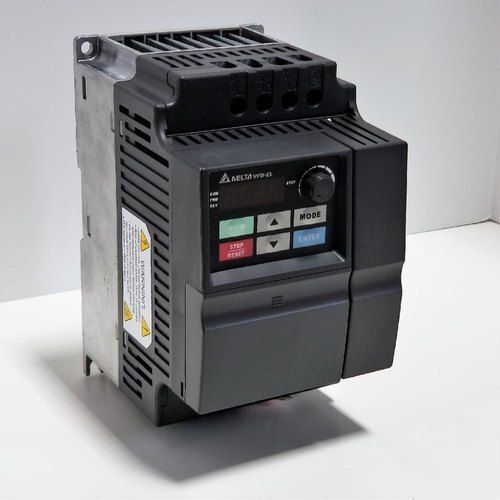
Delta VFD AC Drive/ VFD5A5MS43ANSAA
Price 22685 INR/ Piece
MOQ : 1 Piece
Delta VFD AC Drive/ VFD5A5MS43ANSAA Specification
- IP Rating
- IP20
- Frequency
- 50/60 Hz
- Drive Type
- AC Drive
- Screen Size
- LED Display
- Load Capacity
- 5.5 kW
- Processor Type
- Microprocessor Based
- Speed Range
- 0.1 Hz 400 Hz
- Sensor Type
- Current Sensor
- Phase
- Three Phase
- Mounting Type
- Panel Mount
- Control Type
- Vector Control, V/F Control
- Automation Grade
- Automatic
- Connectivity Type
- RS-485 Modbus
- Features
- Overload Protection, Compact Design, Energy Saving, Auto-tuning
- Cable Length
- Customizable
- Weight
- Approx. 3.5 kg
- Application
- Industrial Automation, Motor Control
- Remote Control
- Yes
- Material
- Plastic, Metal
- Power
- 5.5 kW
- Temperature
- -10C to 50C
- Product Type
- VFD
- Voltage
- 415 V AC
- Enclosure Type
- Open Type
- Starting Torque
- 150% at 1.0 Hz
- Sound Level
- <65 dB
- Altitude
- Up to 1000m without derating
- Cooling Method
- Fan cooling
- Input Frequency
- 47-63 Hz
- Protection Class
- IP20
- Display Type
- Digital LED
- Compliance
- CE, RoHS Certified
- Model Number
- VFD5A5MS43ANSAA
- Output Frequency
- 0400 Hz
- Communication Ports
- RS-485 (Modbus) Built-in
- Overload Capacity
- 150% of rated current for 60 seconds
Delta VFD AC Drive/ VFD5A5MS43ANSAA Trade Information
- Minimum Order Quantity
- 1 Piece
- Payment Terms
- Cash Advance (CA), Cash in Advance (CID), Cheque
- Supply Ability
- 1 Piece Per Day
- Delivery Time
- 2 Days
- Main Domestic Market
- All India
About Delta VFD AC Drive/ VFD5A5MS43ANSAA
Deltais MS300 series is a standard compact vector control drive that inherits Deltais superior drive technology. It supports both IM and PM motor control for application flexibility and provides STO safety mechanism. Also built-in various essential functions, including PLC capacity for simple programming needs, a communication slot for various communication cards, and a USB port to make data uploads and downloads fast and easy. Saving space, reducing setup and wiring time, while providing high efficiency and stability system, all included in the MS300 series with drive size reduced up to 40%.Advanced Motor Control for Automation
The Delta VFD5A5MS43ANSAA provides highly accurate speed and torque regulation with vector and V/F control. This microprocessor-based AC drive is tailored for industrial automation applications, ensuring resilient performance, energy efficiency, and precise motor management. Whether you're retrofitting equipment or implementing new systems, its digital LED display and robust protection features makes monitoring and configuring drive parameters seamless.
Seamless Connectivity and Communication
Equipped with a built-in RS-485 Modbus port, this Delta VFD drive enables effortless integration with PLCs and automation networks, facilitating real-time data transmission and remote control. Its open-type enclosure and panel mount design streamline installation, while support for remote and centralized control grants versatility to system integrators and plant engineers alike.
Reliable Performance in Demanding Environments
Designed to operate from -10C to 50C and at altitudes up to 1,000 meters without derating, the VFD5A5MS43ANSAA is built for durability. With overload protection, fan cooling, and compact construction, it operates quietly (<65 dB) and supports efficient, reliable operation across varied industrial applications.
FAQ's of Delta VFD AC Drive/ VFD5A5MS43ANSAA:
Q: How do you install and configure the Delta VFD5A5MS43ANSAA AC Drive?
A: To install the Delta VFD AC Drive, securely mount it onto a suitable panel using the provided hardware, ensuring adequate ventilation for the fan-cooled system. Configuration is accomplished via the digital LED display, allowing users to set motor parameters, input/output frequencies, and control modes. Refer to the user manual for detailed wiring, parameter setup, and safety procedures.Q: What benefits does the vector and V/F control offer in this VFD model?
A: Vector and V/F control enhance motor performance by enabling precise speed and torque regulation, especially at low frequencies. With 150% starting torque at 1.0 Hz, this feature supports smooth startup and stable operation, making the drive suitable for demanding industrial processes that require high accuracy and reliability.Q: When is the built-in overload protection activated, and how does it safeguard operation?
A: Overload protection is automatically triggered if the drive output exceeds 150% of the rated current for up to 60 seconds. This function protects both the motor and drive from damage due to excessive load, ensuring safe, continuous operation and reducing the risk of costly downtime or equipment failure.Q: What is the process for integrating this drive into an industrial automation network?
A: Integration is straightforward thanks to the built-in RS-485 (Modbus) communication port. Connect the drive to your automation controller or PLC using standard Modbus protocols, configure communication settings via the LED display, and monitor or adjust drive parameters remotely to streamline system control.Q: Where can the Delta VFD5A5MS43ANSAA be used most effectively?
A: Ideal applications include industrial automation, machinery control, and motor speed management for manufacturing, processing plants, and OEM machinery. Its robust capabilities make it suitable for use by dealers, exporters, and system integrators across varied environments in India and similar regions.Q: How does this VFD ensure energy savings in industrial applications?
A: This model optimizes motor operation through automatic load adjustment, auto-tuning, and efficient vector control. By matching motor power output with demand and minimizing energy waste, the drive significantly reduces operational costs while maintaining high process efficiency.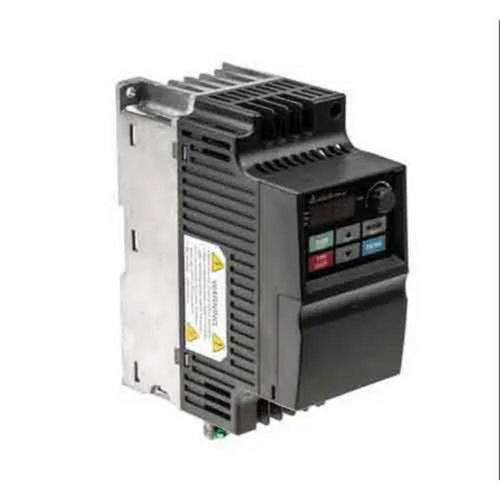
Tell us about your requirement

Price:
Quantity
Select Unit
- 50
- 100
- 200
- 250
- 500
- 1000+
Additional detail
Mobile number
Email

More Products in Delta Automation Category
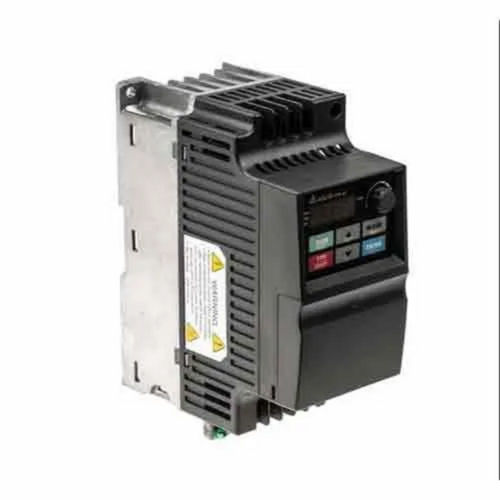
Delta VFD AC Drive/VFD9A0MS43ANSAA
Price 26995 INR / Piece
Minimum Order Quantity : 1 Piece
Connectivity Type : RS485
Features : Energy Saving, Overload Protection, Modbus Communication
Voltage : 415V AC
Cable Length : As per requirement
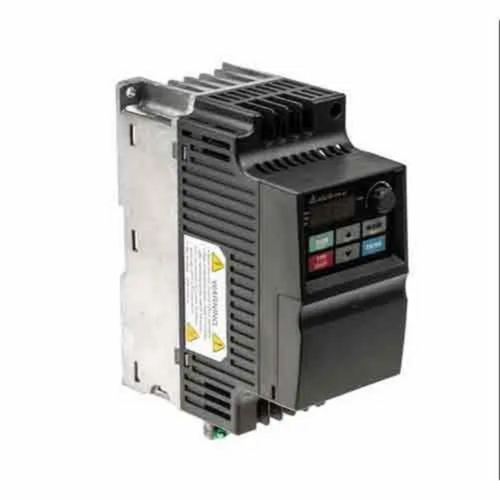
Delta VFD AC Drive/ VFD007EL43A
Price 17190 INR / Piece
Minimum Order Quantity : 1 Piece
Connectivity Type : Terminal Block / RS485 (Modbus) communication
Features : Overload Protection, Fault Display, Compact Design
Voltage : 3 Phase, 380480V AC
Cable Length : Depend on Installation (cables not included)
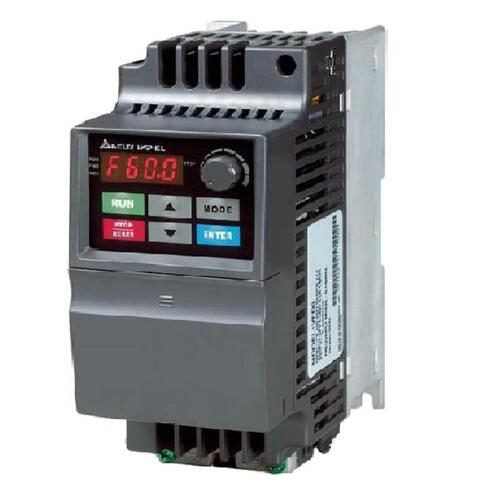
Delta VFD AC Drive/ VFD17AME43ANNAA
Price 34710 INR / Piece
Minimum Order Quantity : 1 Piece
Connectivity Type : RS485 (Modbus Protocol)
Features : Overload Protection, Energy Saving, UserFriendly Interface
Voltage : 380480V AC
Cable Length : As per installation requirement
Delta VFD AC Drive/ VFD4A2MS43ANSAA
Price 19395 INR / Piece
Minimum Order Quantity : 1 Piece
Connectivity Type : RS485 (Modbus) Communication
Features : Energy Saving, Overload Protection, Simplified Operation Menu
Voltage : 380480V AC
Cable Length : As Per Requirement

Contact Details
UNITED CONTROL ENGINEERS INDIA PRIVATE LIMITED
GST : 09AACCU4195M1ZP
GST : 09AACCU4195M1ZP

- Plot No. 98, Toy City, Ecotech-3rd, Greater Noida - 201306, Uttar Pradesh, India
- Phone :08045802887
- Mr Sumit Agrawal (Director)
Mr. Pramendra Chaudhary (Director)
Mobile :+919311150492, +919990632600, +919999706958 -
 marketing@unitedcontrolengg.com
 Send Inquiry
 Send SMS

|
UNITED CONTROL ENGINEERS INDIA PRIVATE LIMITED
All Rights Reserved.(Terms of Use)
Developed and Managed by Infocom Network Private Limited.
Developed and Managed by Infocom Network Private Limited.

